Book Illustrators for Hire
NADIA RONQUILLO - CHILDREN'S BOOK

Children’s books don’t just tell stories — they stage them. The right illustration turns a manuscript into a world kids can step into: characters that feel real, emotions that read instantly, and scenes that keep pages turning. That’s why book illustrators for hire aren’t simply “artists for pages.” They’re visual storytellers who translate voice, rhythm, and meaning into images that carry the narrative.
For publishers and self-publishing authors searching for illustrators for hire, the biggest challenge is rarely “finding someone who can draw.” The real challenge is finding an illustrator who can deliver consistency, clarity, and production-ready artwork — while elevating the story with cinematic composition and child-friendly appeal.
Nadia Ronquillo is a children’s book illustrator and visual development artist based in Ecuador. They collaborate remotely with authors and teams worldwide, creating warm, expressive illustrations influenced by animation and storytelling craft.
Their experience spans children’s books, animated shorts, and television, helping stories land with both kids and the grown-ups who buy the books.
Illustrators for hire who understand children’s publishing
A children’s book illustration project lives at the intersection of creativity and logistics. Strong art direction matters, but so do deadlines, file prep, print specs, and layout coordination. When illustrators for hire understand the publishing workflow, projects tend to run smoother and results look more professional.
Nadia Ronquillo’s background bridges both worlds: illustration plus visual development for animation. That combination typically shows up as:
- clearer staging and camera angles (so scenes “read” fast),
- stronger character acting (expressions and body language),
- thoughtful color scripting (mood and pacing across spreads),
- and consistent design from page one to the final file.
They also bring experience collaborating on development programs and pitching environments — settings where storytelling choices must be sharp, intentional, and audience-aware.
Children’s book illustrator portfolio
what to look for (and what they deliver)

A strong Children’s book illustrator portfolio should answer three practical questions:
- Can they stay consistent for an entire book?
Characters should look like the same character across different emotions, lighting, and angles. - Can they tell the story visually?
Illustrations should do more than decorate text — they should reveal subtext, humor, tenderness, and action. - Can they finish like a pro?
Clean delivery, correct formats, and predictable milestones reduce stress for authors and editors.
In their portfolio, Nadia Ronquillo’s body of work spans many children’s titles, with projects ranging from playful, upbeat stories to tender, emotionally-driven narratives. They’ve highlighted experience across a large number of books, and they showcase multiple approaches that suit different age groups and tones.
Style range: animation energy + warm, bright palettes
Some illustrators lock into one signature look. Others maintain a recognizable voice while adapting to different project needs. Nadia Ronquillo describes their style as strongly influenced by animation films and cartoons, and they work in both a painterly approach and a flatter, more graphic approach — depending on the project’s goals and readership.
They also associate their preference for warm, bright palettes with living in Guayaquil, Ecuador — a setting they describe as sunny and vibrant. That “sunlit” color sensibility can help children’s books feel inviting, optimistic, and emotionally clear.
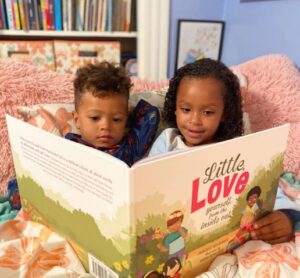
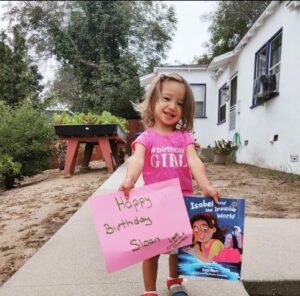
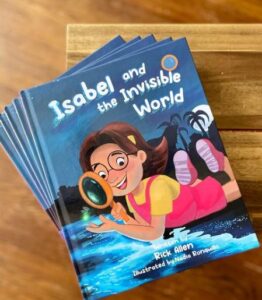
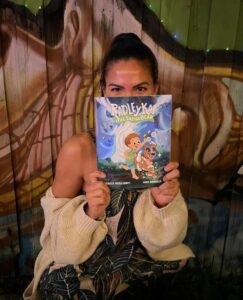
Hire an illustrator for a children's book
a production-friendly process
When authors decide to Hire an illustrator for a children’s book, the process should feel structured (so timelines stay sane) and collaborative (so the art stays true to the story). Nadia Ronquillo’s self-publishing oriented workflow is built around clear steps that support both storytelling and production.
Their process highlights deliverables such as:
- Layout assurance
- Art direction
- Illustration creation
- Integrated layout design
- Ready-to-publish formatting
- Amazon & print support
- Proof copy corrections
That’s especially useful for self-publishing authors who need more than standalone images — they need a book that is ready to upload, print, and sell.

How much does it cost to hire an illustrator for a children's book?
Pricing is where dreams meet spreadsheets. The cost varies because illustration is not one product — it’s a bundle of decisions: number of images, complexity, style, rights, timeline, and revision scope.
Industry guidance often describes pricing in a few common models:
- Per illustration / per page (simple to scope)
- Per spread (common for picture books)
- Project flat fee (useful when scope is stable)
- Hourly / day rate (common for concept phases or add-ons)
A widely cited marketplace benchmark (based on many quotes) places typical children’s book illustration costs around (estimated):
- $110–$200 for a single-page illustration
- $200–$400 for a two-page spread
- $2,900–$10,000 for a full picture book, depending on scope and complexity
Those numbers are not a universal “price list,” but they help authors budget realistically.
What changes the price (fast)?
If an author asks, “Why did Quote A and Quote B look like they came from different planets?”, it’s usually driven by these factors:
- Art style complexity: painterly textures and detailed environments typically cost more than simpler, flatter looks.
- Number of final illustrations: a 32-page book with many full-bleed spreads is a different scope than spot art.
- Character design needs: new cast creation, turnarounds, and expression sheets add time.
- Revisions: extra rounds beyond the agreed milestones increase cost.
- Timeline: rush delivery can raise rates.
- Usage rights: broader licensing (merch, adaptation, etc.) changes pricing.
A good commercial agreement makes scope visible before anyone starts painting midnight eyeballs on page 27.
A brief that helps illustrators (and protects the budget)
A strong brief reduces revision loops, and revision loops are where budgets go to “mysteriously” evolve.
A project brief works best when it includes:
- a one-paragraph synopsis,
- target age range and trim size,
- illustration count (spots, half-pages, full spreads),
- visual references (mood, palette, character vibe),
- production needs (print + ebook, formatting support),
- timeline and milestone expectations.
That’s also the fastest way to get accurate quotes and comparable proposals.
Why authors choose a visual development artist for books
Visual development in animation trains artists to think in staging, camera, rhythm, and clarity — the same skills that make picture books feel effortless to read.
For children’s books, that usually means:
- stronger page-to-page pacing,
- clearer focal points (kids see what matters first),
- expressive acting that supports comprehension,
- and environments that feel designed, not random.
That’s the quiet superpower behind many illustrations that “just work.”

Next step: availability + contact
Nadia Ronquillo works with authors and teams internationally through remote collaboration and invites inquiries for new projects. For business questions, timelines, and portfolio requests, they can be contacted directly by email.
